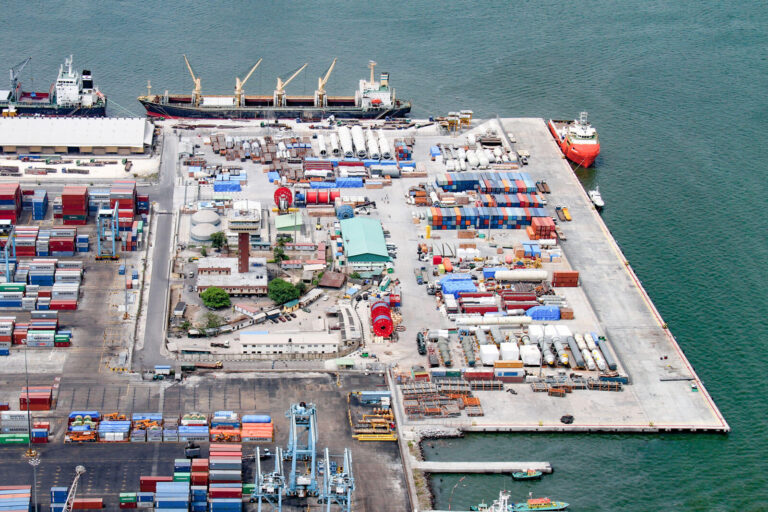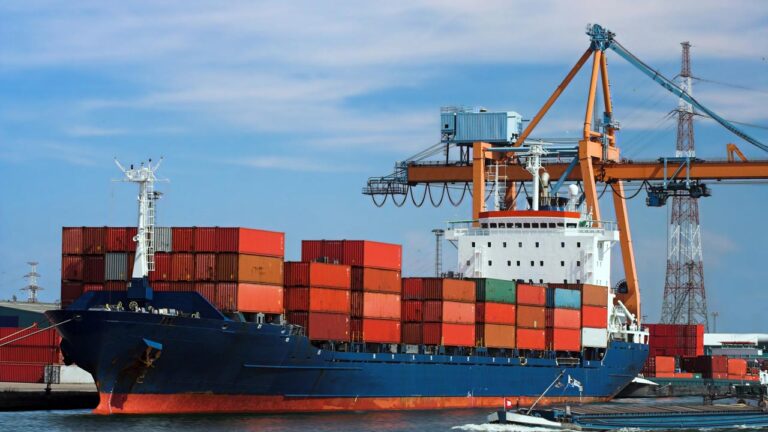
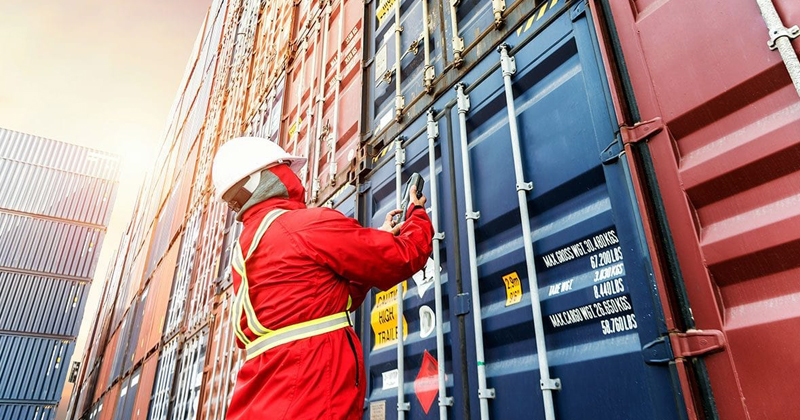
Clearing goods at Nigerian ports is a process that rewards preparation and punishes carelessness. For importers who don’t grasp the process, the outcome is always the same: goods languishing at the ports, demurrage costs adding up, and a supply chain in disarray. Knowing how to clear goods at Nigerian ports, and in what order, is the key to any efficient import operation in Nigeria.
List of 10 Steps to Clear Goods at Nigerian Ports Without Delays
Here’s a clear, practical breakdown of the key steps involved in clearing goods at Nigerian ports efficiently and without unnecessary delays:
- Open a Form M Before Your Goods Are Shipped
- Obtain a Pre-Arrival Assessment Report (PAAR)
- Secure All Relevant Permits and Certificates
- Engage a Licensed Customs Agent
- Submit Your Import Documentation to the Nigeria Customs Service
- Pay Your Customs Duties and Levies
- Respond to Customs Examination Notices Promptly
- Obtain Your Delivery Order from the Shipping Line
- Coordinate Terminal Pickup and Haulage
- Work with Wolid International Services for a Seamless Clearance Experience
1. Open a Form M Before Your Goods Are Shipped
The Form M is the foundation of every legitimate import transaction in Nigeria, and the entire process of clearing goods at the ports begins with it. The Form M is a mandatory foreign exchange declaration that must be opened by the importer through an authorized dealer bank before the goods leave the country of origin.
The entire process of clearing goods at any port in Nigeria is made impossible without a valid Form M, as it underpins every step of the process. You must open your Form M as early as possible, ensuring that it reflects the same information as contained in the commercial invoice, packing list, and bill of lading.
If there is any form of discrepancy between the documents at the time of clearing your goods, it will generate a query, leading to a delay in the release of your goods. The guidelines for applying for a Form M and foreign exchange documentation for importers are provided by the Central Bank of Nigeria.
2. Obtain a Pre-Arrival Assessment Report (PAAR)
The Pre-Arrival Assessment Report is produced by the Nigeria Customs Service through the NICIS II system. It is the Customs’ assessment of the duties and levies payable on your goods before the goods physically arrive at the port. To obtain a Pre-Arrival Assessment Report, your customs agent needs to submit your documents to the system.
These documents include your Bill of Lading, commercial invoice, packing list, and Form M. The system then processes your documents and produces an assessment based on the HS code and tariff rates. It is important to obtain your Pre-Arrival Assessment Report before your vessel arrives at the port.
This gives you an opportunity to calculate your duty liability before your vessel arrives and be in a position to pay immediately upon arrival. Delays in obtaining your Pre-Arrival Assessment Report mean a delay in clearance.
3. Secure All Relevant Permits and Certificates
Some categories of goods may need the importer to obtain regulatory permits and certificates from the relevant government agencies before customs clearance for the goods. Pharmaceutical products and food products, for instance, may need clearance from the National Agency for Food and Drug Administration and Control in Nigeria.
Electrical and electronic equipment, toys, and some other goods may need a Conformity Assessment Certificate from the Standards Organisation of Nigeria under the SONCAP regime. Goods under the Pre-Verification of Conformity scheme may need a PVOC certificate from the country of origin before shipment.
Failure to obtain required permits will result in Customs holding your goods, a process that may take weeks. Determining which permits apply to your goods and obtaining such permits before shipment is not a choice but a necessity.
4. Engage a Licensed Customs Agent
The Nigeria Customs Service requires that an importer secure the services of a licensed customs agent, also known as a customs broker, to process the required documents for clearance on behalf of the importer.
This is not a trivial requirement. It is a recognition of the real complexity involved in the customs clearance process, which includes working with the NICIS II system, tariff classification systems, examination procedures, and working with a multitude of government agencies simultaneously.
A qualified licensed customs agent is not merely a person who completes forms, but a person who thinks in advance about potential problems before they occur, completes all required and accurate forms, and works with Customs officers in a way that enables the process to be done efficiently and effectively.
The selection of a customs agent with experience in a particular port of entry for your goods is an important factor. This is because working with terminal operations and customs officers at Apapa Port, Tin Can Island Port, and other ports in Nigeria is very different.
5. Submit Your Import Documentation to the Nigeria Customs Service
Once your PAAR has been created and your documents are in place, your customs agent will submit an entry on NICIS II, also known as the Single Goods Declaration. This declaration brings all the information related to your consignment, from the details of the importer to the description and quantity of goods, HS code, declared value, and duties payable.
It is important to be accurate at this stage. Inconsistency between the Single Goods Declaration and the accompanying documents will result in a query, examination, or both. Your customs agent needs to check all the details in the declaration against the original documents to avoid any unnecessary discrepancies.
6. Pay Your Customs Duties and Levies
After the Single Goods Declaration has been assessed and accepted, the importer needs to pay all the customs duties and levies before the goods are released.
The duties and levies payable by the importer include import duty, which is charged on the CIF value of the goods; a CISS levy equivalent to one percent of the FOB value; an ETL levy for ECOWAS Trade Liberalisation Scheme members; and VAT for certain categories of goods.
The payment process is made through the banking channels that are linked to the Customs revenue collection system. The delay in payment at this stage is entirely within your control. The longer the delay between duty assessment and payment, the longer your goods are kept at the terminal.
Paying on the same day as the assessment is the standard for all importers who are keen on speed. The Nigeria Customs Service provides comprehensive information on duty rates and payment.
7. Respond to Customs Examination Notices Promptly
Despite this, it is still in the hands of the Nigeria Customs Service to decide which consignment to physically examine, should they so desire. If a physical examination is ordered, the speed with which a case is resolved is entirely dependent on how the importer or their representative responds.
A physical examination requires the physical presence of a Customs officer, an agent of the importer, and, in some instances, a representative of a regulatory body. All documentation must be available on the day of the physical examination.
This is a one-day event, but if there is a delay in providing documentation or if the representative of the importer is unavailable, this one-day event can turn into a multi-day event, which an experienced customs agent will be able to expedite in a timely manner.
8. Obtain Your Delivery Order from the Shipping Line
Before your cargo can actually leave the terminal, it is necessary to secure a delivery order from your shipping line or its agent. This Delivery Order is only issued upon the surrender of the original Bill of Lading and the settlement of all freight charges, including any demurrage/detention charges.
This step in the process is often not included in the planning stages, and importers who have failed to include this in their planning have found themselves in a situation where their cargo has been cleared by Customs in full, but they cannot actually move their cargo.
By working with your shipping line agent early in the clearance process, verifying documentation requirements, and paying off any freight charges due in a timely manner, this can be avoided in the final stages.
9. Coordinate Terminal Pickup and Haulage
With Customs clearance and Delivery Order in hand, the final step prior to shipment of your goods from the port is to arrange for the physical evacuation of your container or cargo from the port.
At Apapa and Tin Can Island Ports, this is achieved by complying with the Eto truck call-up system of the Nigerian Ports Authority, which requires that all haulage trucks be registered on Eto and be issued a time slot prior to arrival at the port gate. Trucks arriving without a valid ETO slot are not allowed to enter, resulting in a full day’s operation lost.
Working with a haulage company that is registered on ETO, is familiar with the operation of the terminal, and is experienced in working in the Apapa corridor is a key factor in determining the speed with which your goods are moved from the port gate to their final destination.
10. Work with Wolid International Services for a Seamless Clearance Experience
It takes a certain level of expertise, coordination, and port presence to successfully execute all of these steps well. Wolid International Services Ltd., based at 21 Oyekan Road, Apapa, Lagos, helps importers and exporters obtain a completely integrated solution that covers all aspects of the importation process from start to finish.
This ranges from Form M documentation to the final haulage of goods. Wolid’s services include customs clearance of import and export goods at all ports and borders in Nigeria; full freight forwarding services with comprehensive documentation support, including Form M documentation, HS code checking, PAAR services, and road haulage services for the delivery of goods within Lagos State and major routes in Nigeria; warehousing services for goods awaiting transport; and cargo insurance facilitation.
The team works with an in-depth understanding of the Nigerian port environment, which has been gained from years of handling clearances in Apapa, Tin Can Island, and other major entry ports in Nigeria. Every consignment is worked on with the urgency and attention to detail that today’s import business requires.
To work with a customs clearance and freight forwarding partner that delivers results, visit wolidinternationalltd.net or call +2347044064866. Wolid International Services is at 21 Oyekan Road, Apapa, Lagos.