Inefficiency in import and export logistics doesn’t always scream for attention. It can creep up on a company in small ways: documentation errors, missed deadlines, avoidable demurrage costs, and regulatory tangles that could have been avoided with better preparation.
For Nigerian businesses that rely on international trade, a formalized approach to logistics management is no longer a choice; it’s the line between a supply chain that works and one that constantly costs more than it should. The ten steps in this guide are a roadmap for building that structure.
List of 10 Steps to Streamline Import and Export Logistics in Nigeria
Follow these steps to streamline your import and export logistics in Nigeria
- Understand the Regulatory Framework Before You Ship
- Get Your HS Code Classification Right
- Open and Manage Your Form M Correctly
- Work With a Licensed and Experienced Customs Broker
- Arrange Pre-Arrival Documentation Early
- Choose the Right Freight Mode and Incoterms
- Factor Port Congestion Into Your Planning
- Manage Your Duty and Levy Obligations Proactively
- Invest in Warehousing and Cargo Tracking
- Partner With a Full-Service Logistics Provider
1. Understand the Regulatory Framework Before You Ship
All import and export transactions in Nigeria operate within a framework of regulation by various agencies. The Nigeria Customs Service is responsible for the classification of goods for customs duty and the examination of goods in all ports of entry.
The Standards Organisation of Nigeria is responsible for SONCAP certification of restricted goods into Nigeria and NAFDAC clearance of foodstuffs, drugs, and cosmetics. Knowing which agency is responsible for your goods is the most effective way of avoiding costly surprises at the port of entry.
2. Get Your HS Code Classification Right
The Harmonised System code assigned to your goods determines your duty rate, applicable levies, and whether your cargo falls under any import prohibition or restriction. A misclassification, whether intentional or accidental, can result in cargo seizure, penalty assessments, or clearance delays that run into weeks.
Businesses should verify their HS code classification against the World Customs Organization’s published tariff schedule and cross-reference with an experienced customs broker before the Form M application is submitted.
3. Open and Manage Your Form M Correctly
The Form M is the foundation of every import transaction in Nigeria. It is the Central Bank of Nigeria’s instrument for foreign exchange control, and errors in its completion, wrong commodity description, incorrect HS code, or undervalued consignment can invalidate the entire transaction and trigger regulatory scrutiny.
The Form M must be opened through an authorised dealer bank before the goods are shipped, not after they arrive. Businesses that treat the Form M as an afterthought consistently find themselves in avoidable clearance disputes.
4. Work With a Licensed and Experienced Customs Broker
Nigeria’s customs clearance process involves multiple document submissions, agency liaison, duty payments, and physical examination stages that are difficult to navigate without professional knowledge.
A licensed customs broker does not merely submit paperwork — a competent one anticipates document queries, understands the examination risk profile of different cargo types, and knows how to respond when the Nigeria Customs Service raises an examination order.
Wolid International Services Ltd., based in Apapa, Lagos, provides exactly this level of clearance expertise across regulated and general cargo categories. Reach the team at wolidinternationalltd.net or +2347044064866.
5. Arrange Pre-Arrival Documentation Early
One of the most common reasons for incurring demurrage costs in Nigerian ports is the time taken from the time of arrival of the vessel to the time when the documents of the importer are ready. The Pre-Arrival Assessment Report (PAIR) is supposed to be prepared and submitted before the vessel arrives at the port.
The Combined Certificate of Value and Origin, Bill of Lading, packing list, and commercial invoice are supposed to be in sync and submitted to customs without any discrepancies. A checklist of documents and internal accountability for each of the documents can go a long way in arriving at the port prepared.
6. Choose the Right Freight Mode and Incoterms
Whether your goods travel by FCL, LCL, air freight, or bulk ship depends on your volume, your timing, and your cost sensitivity. Each option has its own set of costs and risk consequences in Nigeria. Another factor is the Incoterm agreement that is in place in your business.
If you are an importer and you have entered into a CIF agreement and do not understand the cost and control ramifications of such an agreement, you could be paying unnecessary fees or have taken on unnecessary risks that you are unaware of. Incoterm is a set of guidelines developed by the International Chamber of Commerce.
7. Factor Port Congestion Into Your Planning
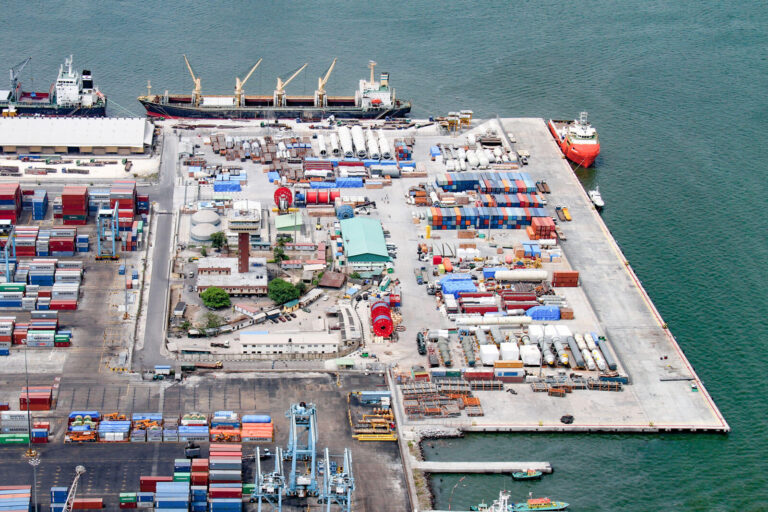
Apapa Port and Tin Can Island Port are among the busiest ports in West Africa. Congestion at the port gate and inside the ports is the new normal. Failing to take into consideration the port congestion when determining when your ships arrive at the destination is a common mistake by companies.
They consistently underestimate the cost of the goods they are moving into the marketplace and overestimate the speed at which they are getting the goods into the marketplace.
By working with a logistics company that has real-time information about the ports and can assist you in optimizing the time of arrival at the ports, the ports to utilize, and the discharge of goods, you are able to mitigate the cost of port congestion.
8. Manage Your Duty and Levy Obligations Proactively
Nigeria’s import duty is charged based on the CIF of the goods imported. However, the duty is not the only cost to be cleared. The Comprehensive Import Supervision Scheme (CISS) levy, the ECOWAS Trade Liberalisation Scheme (ETLS) levy, where applicable, and the VAT charged on the imported goods are also added to the cost of the goods.
Most business organizations have been experiencing shortfalls when it is time to pay the import duty because they only estimate the duty rate. An estimate of the duty and levy is prepared before the goods are shipped.
9. Invest in Warehousing and Cargo Tracking
The logistics process does not end once the goods have cleared customs. For businesses that make regular imports, having access to bonded or commercial warehousing near the port of entry, with effective inventory tracking, can help avoid the chaotic scramble of cleared goods having nowhere to go.
It can also allow for better demand management, as businesses with access to reliable warehousing can begin to optimize their freight costs by consolidating shipments and reducing costs over time.
Cargo tracking systems, which are now ubiquitous through freight forwarders and shipping lines’ websites, should be integrated into all importers’ business processes, not just in response to lost shipments.
10. Partner With a Full-Service Logistics Provider
The companies that reliably move goods in and out of Nigerian ports quickly and efficiently are, almost invariably, the ones that have entered into a long-term logistics partnership and are not outsourcing each and every shipment to a company that bids the lowest.
A full-service logistics company, one that handles everything from freight forwarding to customs clearing to haulage to warehousing, provides a sense of continuity in their knowledge of your cargo profile, your customs history, and your business needs.
And that, in turn, translates into a reduced error rate, a quicker turnaround, and a logistics operation that just gets better and better.
Wolid International Services Ltd. offers precisely this kind of end-to-end logistics partnership. From Form M documentation and PAAR generation to freight forwarding, customs clearance, and last-mile delivery, Wolid manages every stage of the import and export logistics process for businesses operating across Nigeria.
Visit wolidinternationalltd.net or call +2347044064866 to discuss how Wolid can strengthen your supply chain.