When it comes to maritime trade in Nigeria, Apapa stands in a league of its own. Located in the heart of Lagos, this bustling port district has evolved into the backbone of the nation’s import and export activities.
From its strategic location and world-class port facilities to the concentration of logistics companies and trade professionals, Apapa plays a critical role in keeping Nigeria’s economy moving.
10 Reasons Apapa, Lagos Leads Nigeria’s Shipping Industry
The following are ten reasons why Apapa, Lagos is widely regarded as Nigeria’s shipping capital.
- Home to the Lagos Port Complex
- Highest cargo volume in Nigeria
- Concentration of global shipping lines
- Strongest customs and clearing infrastructure
- Deep pool of freight forwarding expertise
- Direct access to major road haulage networks
- Proximity to Tin Can Island Port
- Established warehousing and logistics ecosystem
- Gateway to West African trade routes
- Anchor for Nigeria’s AfCFTA participation
1. Home to the Lagos Port Complex
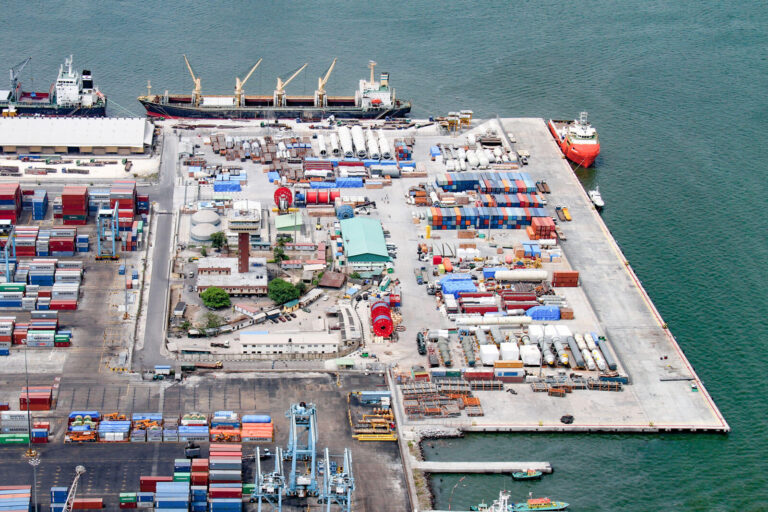
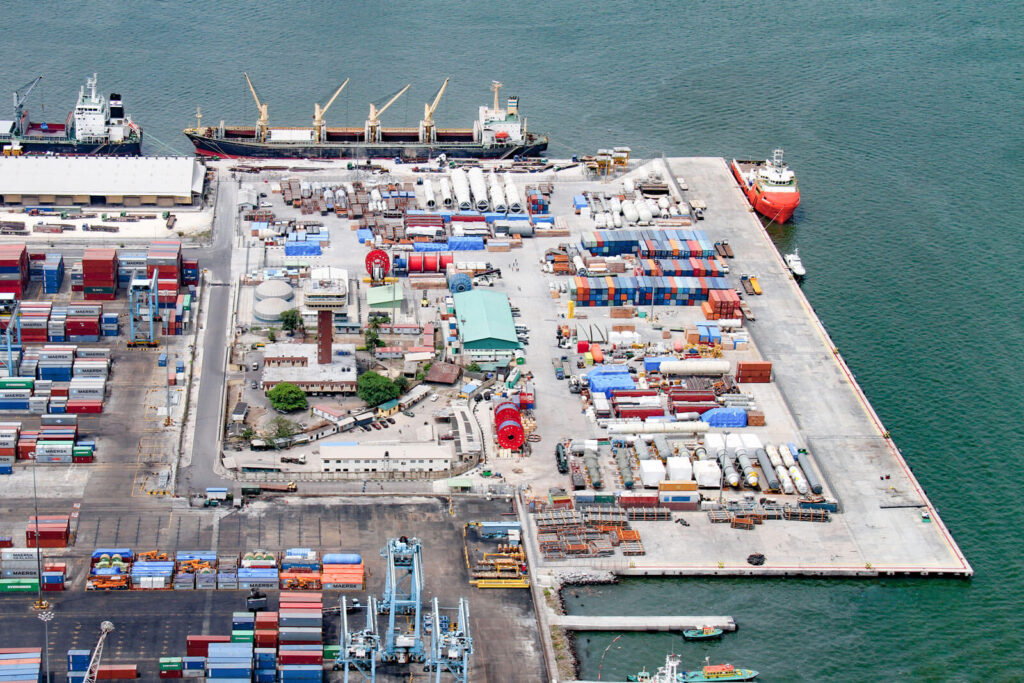
The Lagos Port Complex, Apapa, is the largest and busiest port facility in Nigeria. The facility is run by the Nigerian Ports Authority and handles the majority of Nigeria’s containerized cargo. The facility receives both import and export consignments.
According to the Nigerian Ports Authority, the Lagos port complex handles close to 70 percent of Nigeria’s total cargo throughput. Any discussion of maritime commerce in Nigeria starts and ends here.
2. Highest Cargo Volume in Nigeria
Nigeria processes over 1.3 million TEUs in containerised cargo every year through its major ports, and a significant portion of this figure is processed in the port of Apapa. The volume of trade is enough to attract many global carriers, terminal operators, and logistics companies that need to operate in this trade hub.
The volume also means that there will be more competitive freight rates, more frequencies, and service options for importers and exporters in Nigeria.
3. Concentration of Global Shipping Lines
Some of the world’s biggest container shipping companies have a presence in Apapa. Maersk, MSC, CMA CGM, and Hapag-Lloyd have a presence in Apapa.
According to the UNCTAD’s Review of Maritime Transport, the world’s connectivity through a port is related to the number of shipping lines serving the port. Apapa does very well in this regard, offering Nigerian businesses routes to Europe, Asia, America, and Africa.
4. Strongest Customs and Clearing Infrastructure
The Nigeria Customs Service’s most experienced and highest-capacity operation is centered in Apapa. The density of licensed clearing agents, customs brokers, and freight forwarders operating in this district is unparalleled anywhere else.
The Nigeria Customs Service processes billions of naira in import duties through its Lagos command, a figure that only underscores the level of trade activity this district supports. For any trade-related operation involving Form M processing, PAAR, and HS code, Apapa offers the highest level of expertise.
5. Deep Pool of Freight Forwarding Expertise
Freight forwarding in Nigeria is not a simple business. There is a need to understand port procedures, shipping documentation, and regulations, as well as the reality of shipping through Nigerian ports. Apapa has been building and retaining such expertise for decades.
Companies such as Wolid International Services Ltd. have based their entire existence on the Lagos port system, building institutional knowledge of port procedures, something a newcomer simply cannot match.
6. Direct Access to Major Road Haulage Networks
However, moving cargo out of a port is just half the battle. Moving it to its final destination requires a good road infrastructure and a good haulage industry. Apapa port is connected by a road to Lagos, and this provides a link to transport companies operating in Lagos and other parts of Nigeria.
This provides transport companies operating in Apapa port with a link to distribution routes to Lagos, the Southwest, and other parts of Nigeria. This provides a competitive rate for cargo to be hauled to inland destinations.
7. Proximity to Tin Can Island Port
Apapa, however, does not operate independently. This is because Tin Can Island Port is located immediately adjacent to the Apapa port corridor. Therefore, it can be considered to be an extension of the overall cargo handling capabilities within the district.
For this reason, it can be noted that a combined port hub is created by both of these port complexes, through which a large percentage of Nigeria’s containerized trade is conducted. Many of the shipping companies operating within Apapa Lagos also maintain a presence within both port complexes.
8. Established Warehousing and Logistics Ecosystem
It also requires somewhere to go while it is in transit in the country, as it is cleared and other logistics are made. There is an advanced infrastructure in terms of warehouses in Apapa, including bonded warehouses and off-dock facilities that are sometimes just minutes away from the port gates.
Companies like SIFAX Group, which operate SIFAX Offdock Nigeria Limited, have invested in infrastructure that is specifically designed to bridge this gap in terms of logistics so that goods do not sit around unnecessarily and incur extra costs.
9. Gateway to West African Trade Routes
Nigeria is the biggest economy in Africa by size of GDP, according to the World Bank, and Apapa is Nigeria’s entry point for imported goods. This makes it an obvious entry point not only for Nigeria’s trade but also for trade destined for other West African countries via Lagos.
Global international shipping routes are designed with the Lagos route, which means that goods destined for Ghana, Benin, and other countries often pass through or have a connection with Apapa. For those with a regional view, Apapa’s port is an existing logistics hub.
10. Anchor for Nigeria’s AfCFTA Participation
The African Continental Free Trade Area is one of the most important trade policy changes in Africa in decades. As Nigerian businesses seek to take advantage of these new trade opportunities and favorable tariff treatment, the importance of Apapa as a gateway port to Africa is heightened.
Operators like MSC already operate on these routes, and its customs and documentation facilities will be able to accommodate the increased trade that full AfCFTA implementation promises to deliver. According to the African Union, the AfCFTA will establish a single market covering over 1.3 billion people in Africa, and Nigerian ports will play a major role in this process.
The dominance of Apapa in Nigerian shipping is no accident. Rather, it is the result of decades of infrastructure development and industry concentration that have elevated this district to its position as the undisputed hub of maritime commerce in Nigeria and one of the most dynamic port environments in West Africa.
For any business that transports goods in and out of Nigeria, developing a relationship with the right shipping companies in Apapa, Lagos, is not just important—it is essential.
For customs clearance, freight forwarding, haulage, storage, and cargo insurance in all ports in Nigeria, contact Wolid International Services Limited at 21 Oyekan Road, Apapa, Lagos. Visit wolidinternationalltd.net or call +2347044064866.