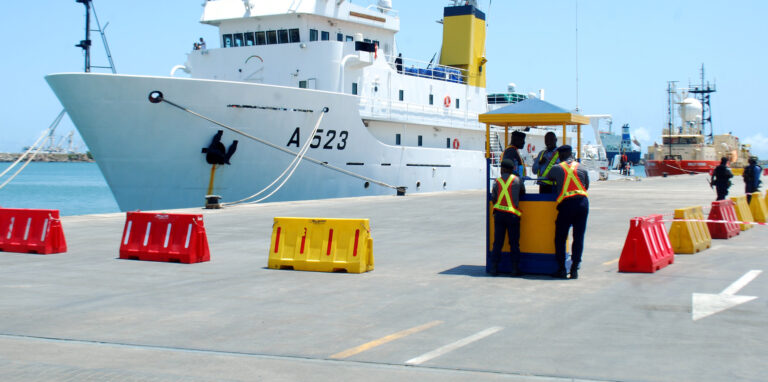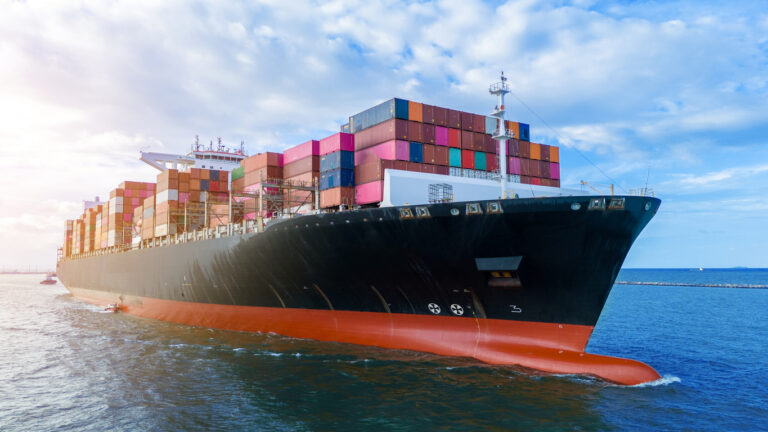

Every vessel calling at a Nigerian port enters one of the most operationally demanding maritime environments in West Africa.
Between the congestion at Apapa and Tin Can Island, the layered regulatory requirements of the Nigerian Ports Authority, Customs, and NIMASA, as well as the financial exposure that accumulates when port calls are mismanaged, the quality of ship agency services Nigerian operators and vessel owners rely on is never a peripheral concern. It is the operational backbone of every successful port call.
The 10 Essential Ship Agency Services
Below are ten essential services a ship agency must provide
- Pre-arrival Documentation and Vessel Clearance
- Berth Coordination, Pilotage, and Towage Arrangement
- Customs Clearance and Cargo Documentation
- Vessel Husbandry Services
- Crew Change Management and Immigration Coordination
- Disbursement Account Management
- Cargo Superintendence and Tally Services
- Bunkering and Provisions Supply
- Regulatory Compliance and Statutory Returns
- Freight Forwarding and Last-Mile Delivery.
1. Pre-Arrival Documentation and Vessel Clearance
Long before the vessel enters Nigerian territorial waters, the work of the ship agent has already begun. The process of pre-arrival documentation includes the documentation of vessel particulars, cargo manifests, cargo stowage, and ETA notifications to the Nigerian Ports Authority. The agent applies for the Ship Entry Number certificate, which is then issued by the NPA upon approval.
The agent then applies to the Nigeria Customs Service for the allocation of a rotation number to the vessel. This process has to be followed sequentially, and the vessel cannot be berthed without it. Agents who fail to follow the process correctly set off a chain reaction that leads to demurrage charges before the vessel has even docked.
2. Berth Coordination, Pilotage, and Towage Arrangement
Waiting and being present in Apapa is not enough to get a berth; there is a need to actively engage with the NPA and terminal operators. A good ship agency is responsible for the declaration of the vessel at the berthing meeting, working with the harbor master, and arranging the pilotage and tugage services necessary to safely bring the vessel into and out of berth.
According to the Nigerian Ports Authority, the allocation of an anchorage position is informed to the signal station through the ship agent, and the agent remains the focal point of coordination between the vessel and the shore-based activities throughout the port call. In a busy port, the efficiency of this process is critical in determining how long the vessel is idle.
3. Customs Clearance and Cargo Documentation
Among the most technically complex services rendered by a ship agency in Nigeria is the customs clearance. The process includes the accurate preparation and submission of import documentation, assessment of duties, liaison with the Nigeria Customs Service regarding the release of the cargo, and, where necessary, facilitation of destination inspection by appointed agencies.
For ships that transport regulated items, this process includes NAFDAC, SON, and SONCAP regulations, as well as the processing of Form M and the production of the Pre-Arrival Assessment Report. There is a possibility of unnecessary delays and penalties as a result of a mistake in classification, valuation, and documentation.
4. Vessel Husbandry Services
Husbandry services cover the operational requirements for the vessel during its stay in the port. This includes the provision of fresh water, bunker supplies, and lubricants, as well as the facilitation of vessel repairs, inspections, and waste disposal in an environmentally friendly manner.
As the International Maritime Organization puts it, the vessel has to meet certain environmental and safety requirements during its stay in the port, and the agent has to be at the center of ensuring that the vessel maintains its compliance. In Nigeria, the process of procuring spare parts for the vessel may be complex, and the services of an experienced agent are crucial.
5. Crew Change Management and Immigration Coordination
In Nigerian ports, there are various regulatory agencies involved in the crew change process. They include the Nigeria Immigration Service, the Nigerian Maritime Administration and Safety Agency (NIMASA), and the health department.
A ship agency is responsible for the management of the crew. It includes the process of sign-on and sign-off, visa, shore pass, airport, accommodation, and medical clearance, among others.
The process ensures that all immigration requirements are met on time. A poorly managed crew change not only affects the welfare of the crew but may also cause the vessel to be delayed beyond the stipulated departure time.
6. Disbursement Account Management
Each port call incurs a number of different financial costs, and these include port dues, pilotage, tug and mooring costs, stevedore costs, and local expenses. A ship agency will collate all these costs into a Disbursement Account (DA), and this is then presented to the shipowner or the person chartering the vessel for payment.
It is very important to be transparent and precise in the management of the Disbursement Account. Any agent that overcharges, fails to produce documentation, and delays the presentation of the financial report to the client is exposing the client to fiduciary risks in the management of the Disbursement Account.
7. Cargo Superintendence and Tally Services
Cargo superintendence is the independent monitoring of cargo loading and unloading to ensure that the quantity and state of the cargo being loaded or discharged match the documentation contained in the bill of lading and cargo manifest.
Tally services are an important safeguard against the risks of miscounting and damage, which are ever-present in Nigeria’s terminal environments, where high cargo volumes and pressure of time create an environment conducive to these problems.
A ship agent’s role in arranging or providing cargo superintendence on behalf of a shipowner or charterer is an important step in preventing claims and ensuring the interests of cargo owners are safeguarded from the outset when goods are loaded or discharged from the vessel.
8. Bunkering and Provisions Supply
The bunkering of the vessel involves the supply of fuel, which demands coordination among the ship agent, the bunker supplier, the port authorities, and the NPA’s environmental monitoring officers, whose duty it is to oversee the fuel lifting at the terminal.
The NPA’s marine services guidelines outline the processes and approval criteria for bunkering activities in Nigerian ports, which include the confirmation of payment prior to approval. In addition to the fuel supply, the agent arranges for the supply of fresh water, foodstuffs, and technical stores, which should be synchronized with the vessel’s schedule so that it does not interfere with cargo handling.
9. Regulatory Compliance and Statutory Returns
Nigeria’s maritime regulatory environment involves several bodies, each of which has its own filing requirements and compliance deadlines. NIMASA is responsible for vessel registration, certification of seafarers, cabotage compliance, and pollution of the marine environment. The NPA is responsible for regulating vessel access, pilotage, and berthage. The Nigeria Customs Service is responsible for cargo documentation and import duty compliance.
A top-class ship agency will take care of all the filing requirements, communicate with all of these bodies on behalf of the vessel, and keep the vessel in good regulatory standing during its port call. Failure to comply in this area will result in direct financial implications.
10. Freight Forwarding and Last-Mile Delivery
In the case of ships discharging cargo destined for importers in Nigeria, the scope of the agency’s responsibility does not end at the gate of the terminal.
Freight forwarding services are part of the extension of the agency’s responsibility from the port to the final destination, including terminal liaisons, haulage arrangements, and cargo tracking, as well as the actual movement of cargo from the container yard to the consignee’s doorstep.
This is important, especially in the case of time-sensitive cargo, as failure at the haulage level would be akin to failure at the port level.
The Provider That Covers All Ten
Access to all ten of these services through a single accountable operator is not the normal state of affairs in the ship agency market in Nigeria. Many operators will only deliver part of the range of services described here, which creates the risk of coordination failures and handover problems at each interface where the provider does not have control.
Wolid International Services Ltd., with its operational base at 21 Oyekan Road, Apapa, Lagos, Nigeria, is a ship agency and freight forwarding company providing the complete range of ship agency services required by the import and export trade of Nigeria under a single operational structure with direct relationships with the ports and relevant regulatory authorities.
From the documentation prior to arrival and the generation of the PAAR through the Form M process, customs clearance, NAFDAC/SONCAP compliance facilitation, cargo tracking, and delivery, Wolid provides the depth, access, and expertise that a vessel operator or cargo owner cannot afford to leave to chance.
In the port environment of Apapa, that level of integration is not a luxury; it is a necessity. To engage Wolid for your next vessel call or cargo clearance, visit wolidinternationalltd.net or call +2347044064866.